Foundation Repair 101: What Every Property Manager Should Know About Structural Foundation Problems
For property managers throughout Southern California, maintaining safe, stable, and structurally sound properties is one of the most important parts of protecting long-term property value. Whether managing apartment complexes, commercial buildings, HOA communities, or rental homes, foundation problems can quickly become one of the most expensive and disruptive structural issues a property can face.
Understanding the warning signs of foundation damage — and knowing which repair solutions are available — can help property managers address structural problems early before they escalate into major repairs, liability concerns, or tenant complaints.
At Saber Foundation & Concrete Repair, we work with property managers across Southern California to diagnose, stabilize, and permanently repair foundation settlement, sinking concrete, crawl space issues, and structural movement affecting residential and commercial properties.
Common Signs of Foundation Problems
Foundation damage can appear in many different forms depending on the structure, soil conditions, and severity of settlement. Early detection is critical because small foundation problems often become much larger and more expensive over time.
1. Cracks in Walls, Floors, or Foundations
Cracks are one of the most common indicators of foundation settlement. While small hairline drywall cracks can sometimes be cosmetic, larger or expanding cracks may indicate structural movement beneath the property.
Common foundation-related cracks include:
- Vertical wall cracks
- Stair-step cracks in masonry
- Diagonal drywall cracks
- Cracks above doors and windows
- Slab foundation cracks
- Exterior stem wall cracking
Horizontal foundation cracks are often more serious because they may indicate hydrostatic pressure or lateral soil movement affecting the structure.
Many Southern California properties experience cracking due to:
- Expansive clay soils
- Hillside movement
- Drought conditions
- Soil erosion
- Improper drainage
- Settlement beneath slab foundations
2. Uneven or Sagging Floors
Sloping or sagging floors are another major warning sign of foundation settlement or crawl space structural failure. Floors may feel:
- Uneven
- Soft
- Bouncy
- Sloped
- Sunken in certain areas
These issues are often caused by:
- Weak crawl space supports
- Settling foundations
- Soil voids beneath slabs
- Moisture damage beneath the structure
Properties with raised foundations or crawl spaces are especially vulnerable to floor support deterioration over time.
3. Sticking Doors & Windows
When foundations shift unevenly, door and window frames can become misaligned. Property managers may notice:
- Doors sticking
- Windows difficult to open
- Gaps around frames
- Doors no longer latching properly
These symptoms are extremely common in buildings experiencing active settlement movement.
4. Gaps Around Garage Doors & Exterior Frames
As foundations settle, visible gaps may appear around:
- Garage doors
- Window frames
- Exterior doors
- Trim lines
These openings can allow:
- Water intrusion
- Pest activity
- Energy loss
- Additional structural damage
5. Sinking Concrete & Trip Hazards
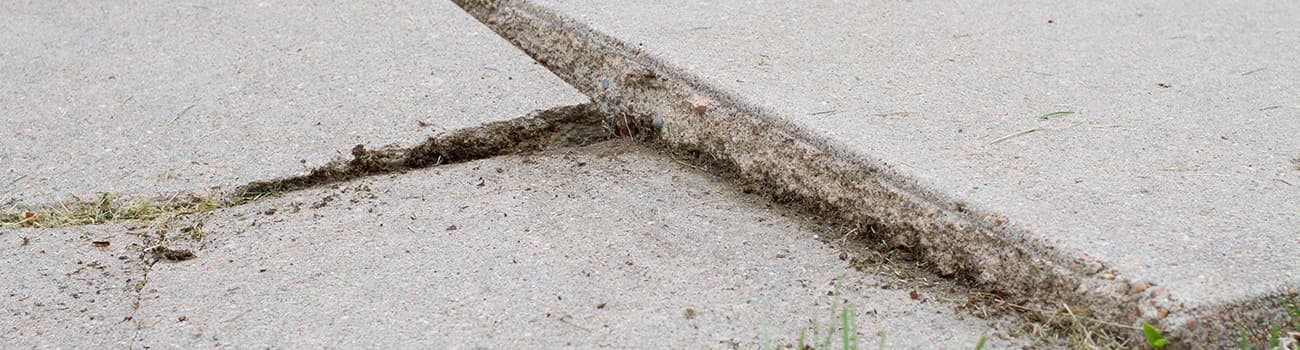
Uneven sidewalks, driveways, pool decks, patios, and walkways are major liability concerns for property managers. Sinking concrete often occurs when soil beneath the slab erodes or compresses.
Trip hazards can create:
- Tenant safety risks
- Insurance claims
- ADA compliance concerns
- Drainage problems
What Causes Foundation Damage?
Understanding the root causes of foundation settlement helps property managers proactively reduce structural risk across their properties.
Expansive Soil Movement
Southern California contains large areas of expansive clay soil that swell when wet and shrink during dry conditions. This constant movement places stress on foundations and slabs over time.
Cities such as:
- Los Angeles
- Riverside
- Anaheim
- San Diego
commonly experience foundation movement related to expansive soils.
Poor Drainage
Improper drainage allows water to accumulate around the foundation, weakening supporting soils beneath the structure. Common drainage-related issues include:
- Broken gutters
- Poor grading
- Pooling water
- Irrigation oversaturation
- Plumbing leaks beneath slabs
Over time, excess moisture can lead to:
- Soil erosion
- Foundation settlement
- Crawl space moisture
- Concrete sinking
Tree Root Intrusion
Large tree roots can extract moisture from soils beneath foundations, causing soil shrinkage and settlement. Roots may also physically lift or crack concrete surfaces.
Poor Soil Compaction During Construction
Improperly compacted fill soils beneath new developments are one of the leading causes of foundation settlement throughout Southern California. Even newer buildings can experience structural movement if underlying soils were not properly prepared before construction.
Common Foundation Repair Solutions
Every property experiences different structural conditions, so repair solutions must be customized to the specific problem affecting the structure.
1. Push Pier Foundation Stabilization
Push piers are heavy-duty steel foundation supports hydraulically driven deep into stable load-bearing soil beneath the structure. These systems help:
- Stabilize settling foundations
- Lift sinking structures
- Prevent future movement
- Restore structural support
Push piers are commonly used for:
- Apartment buildings
- Commercial structures
- Slab foundations
- Hillside homes
2. Helical Pier Installation
Helical piers are steel foundation supports with helical plates designed to mechanically anchor into stable soils beneath weak upper soil layers.
Helical piers are ideal for:
- New construction underpinning
- Lightweight structures
- Retaining walls
- Hillside stabilization
- Foundation reinforcement
3. PolyLevel® Concrete Lifting
PolyLevel® polyurethane foam injection is a minimally invasive concrete leveling solution used to lift and stabilize:
- Sidewalks
- Pool decks
- Driveways
- Warehouse floors
- Patios
- Concrete slabs
The expanding polyurethane fills underlying voids beneath sinking slabs while carefully lifting the concrete back toward its proper elevation.
Unlike traditional mudjacking, PolyLevel®:
- Cures quickly
- Adds minimal weight
- Is waterproof
- Minimizes disruption
4. SmartJack® Crawl Space Support Systems
For sagging or uneven floors, SmartJack® crawl space supports reinforce weakened floor framing beneath the structure.
These systems help:
- Stabilize sagging beams
- Lift uneven floors
- Reinforce crawl space supports
- Improve structural stability
5. Foundation Crack Repair
Foundation crack repair solutions vary depending on severity and structural conditions. Repair methods may include:
- Epoxy injection
- Urethane crack sealing
- Structural reinforcement
- Underpinning systems
6. Stem Wall Repair
Many Southern California homes experience stem wall deterioration caused by rusting rebar and concrete spalling. Stem wall repair systems help restore structural integrity while preventing future corrosion damage.
Why Early Foundation Repair Matters
Foundation issues rarely improve on their own. Delaying repairs often allows settlement to worsen, resulting in:
- Larger cracks
- More structural damage
- Higher repair costs
- Tenant complaints
- Increased liability risks
Early intervention helps property managers:
- Protect property value
- Reduce long-term repair expenses
- Maintain tenant safety
- Preserve structural integrity
- Avoid major reconstruction costs
Why Property Managers Trust Saber Foundation & Concrete Repair
At Saber Foundation & Concrete Repair, we specialize in helping Southern California property managers identify and permanently repair foundation problems affecting residential and commercial properties.
Our team provides:
- Comprehensive structural evaluations
- Foundation stabilization
- Crawl space repair
- Concrete lifting
- PolyLevel® injections
- Helical pier installation
- Push pier underpinning
- Structural repair solutions
We understand the importance of minimizing disruption while protecting the long-term safety and value of your properties.
Protect Your Property Before Problems Get Worse
Foundation settlement and structural movement can quickly escalate into major repair projects if left untreated. By identifying the warning signs early and partnering with experienced foundation repair specialists, property managers can protect both their buildings and their long-term investments.
If you manage properties throughout Southern California and have noticed wall cracks, uneven floors, sticking doors, sinking concrete, or structural movement, contact Saber Foundation & Concrete Repair today to schedule a professional foundation inspection and learn more about our long-term structural stabilization solutions.
