How Sprinkler Overspray Can Lead to Stem Wall Damage in Southern California
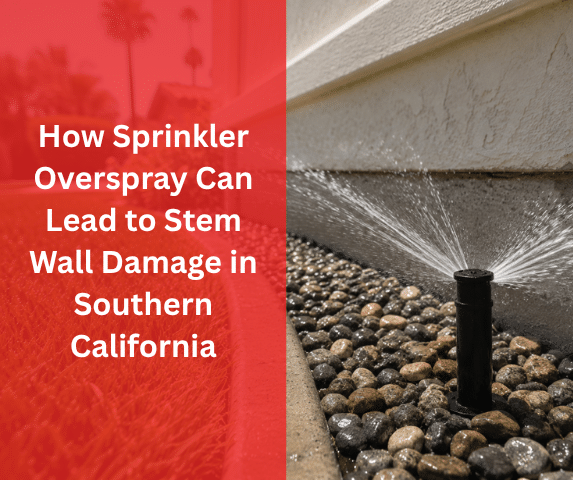
A sprinkler spraying against your house might not seem like a major concern. The concrete gets wet, the sprinkler shuts off, and eventually everything dries.
But when that process happens repeatedly for years, moisture exposure can contribute to deterioration within a concrete stem wall.
For Southern California homeowners, understanding this connection is particularly important because the resulting stem wall damage may not become visible until long after the original sprinkler problem has been corrected.
What Happens When Sprinklers Keep Hitting a Stem Wall?
Concrete stem walls commonly contain steel reinforcing bars, or rebar.
The concrete surrounding the reinforcement helps protect the steel. However, repeated exposure to moisture can create conditions that allow water to work its way into the concrete through cracks, pores, joints, and other pathways.
If moisture eventually reaches the reinforcing steel and conditions become favorable for corrosion, the steel can begin to oxidize.
That's when a hidden process inside the concrete can eventually turn into visible foundation damage.
Rusting Rebar Can Crack Concrete From the Inside
Corroding reinforcement creates a problem beyond the deterioration of the steel itself.
As corrosion products form, they occupy additional space.
Because the reinforcing steel is surrounded by concrete, this expansion can create pressure against the surrounding stem wall.
Eventually, that pressure may contribute to cracking.
As deterioration progresses, homeowners may notice concrete beginning to flake or break away. This process is commonly known as concrete spalling.
Potential warning signs include:
-
Horizontal stem wall cracks
-
Deteriorating or flaking concrete
-
Rust staining
-
Cracks that appear to follow the rebar
-
Sections of concrete breaking away
-
Exposed reinforcing steel
-
Visible corrosion on exposed rebar
When these symptoms appear, it's important to determine what's happening beneath the surface rather than treating the problem as purely cosmetic.
Damage Can Appear Long After the Sprinklers Are Gone
This is one of the most important things to understand about sprinkler-related stem wall damage.
The sprinkler responsible for repeated moisture exposure might not exist anymore.
Maybe the previous homeowner removed it. Maybe the yard was remodeled. Maybe the irrigation system was replaced years ago.
Yet cracking can still appear later.
Corrosion occurs inside the concrete, where homeowners can't see it developing. It can take time before the expansion associated with corrosion contributes to enough cracking or spalling to become noticeable from the exterior.
For homeowners who recently purchased an older Southern California property, the previous irrigation history may be completely unknown.
That's why the absence of current sprinkler overspray doesn't necessarily rule out previous moisture exposure when evaluating a damaged stem wall.
Check Sprinklers Near Your Foundation
Periodically turn on your irrigation system and walk around the property.
Watch where each sprinkler actually sprays.
Sprinklers located near the house should be adjusted so they're watering landscaping rather than continually hitting the foundation.
Also remember that irrigation systems change. Sprinkler heads can shift, break, or be replaced. Plants can affect spray patterns, and landscaping renovations can change how the entire system operates.
Correcting the overspray can reduce continued exposure, but it doesn't repair existing stem wall cracks or rebar corrosion.
Why Simply Covering a Stem Wall Crack May Not Be Enough
A horizontal crack can look like a surface problem.
If corrosion around the reinforcing steel is contributing to that crack, however, the underlying issue is inside the concrete.
Covering the surface doesn't necessarily address deteriorating concrete or corroding reinforcement underneath it.
Proper stem wall repair depends on understanding the condition of the affected area and determining an appropriate repair approach.
Schedule a Stem Wall Inspection in Southern California
If you've noticed horizontal foundation cracks, concrete spalling, rust staining, deteriorating concrete, or exposed reinforcement, consider having your stem wall inspected.
Be sure to mention any current or previous sprinkler exposure you're aware of. Even an irrigation problem from years ago may provide useful information when evaluating the damage.
Saber Foundation & Concrete Repair provides foundation repair and stem wall repair throughout Southern California. Schedule an inspection to find out what's causing the deterioration and what repair options may be appropriate for your home.
