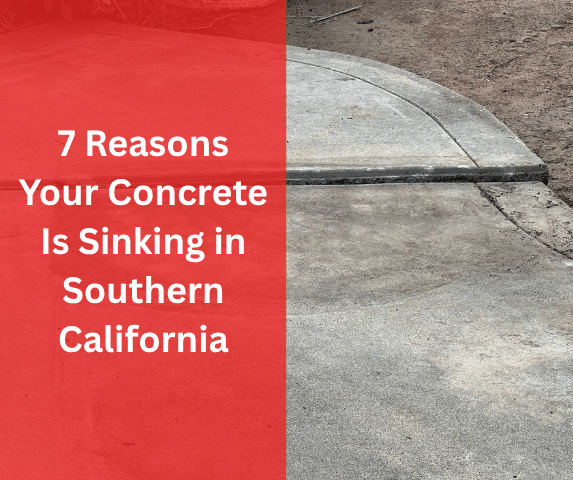
7 Reasons Your Concrete Is Sinking in Southern California
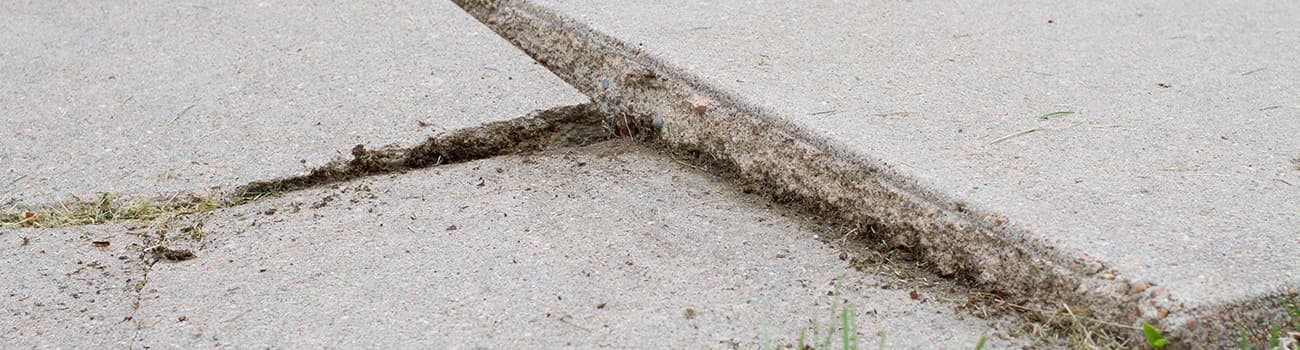
Have you noticed part of your driveway sitting lower than it used to? Maybe your sidewalk has become uneven, your patio is pulling away from the house, or your pool deck has developed a noticeable dip.
Sinking concrete is common, but the concrete itself isn't always the source of the problem. In many cases, changes in the soil beneath the slab cause it to lose support and settle.
Here are seven common reasons concrete can sink in Southern California.
1. Poorly Compacted Soil
Concrete needs a solid, stable base. If the soil beneath a driveway, sidewalk, patio, or pool deck wasn't properly compacted before the concrete was poured, it can gradually settle under the slab's weight.
As the soil settles, voids can develop beneath the concrete. Without consistent support, sections of the slab may begin to sink or crack.
2. Water Is Washing Away the Soil
Water is one of the biggest contributors to sinking concrete.
Poor drainage, roof runoff, irrigation, plumbing leaks, or heavy rain can allow water to travel beneath a slab and gradually wash away supporting soil. As erosion creates empty spaces below the concrete, the slab can settle into them.
If sinking concrete appears near areas where water frequently collects, drainage may be part of the problem.
3. Dry Soil Can Shrink
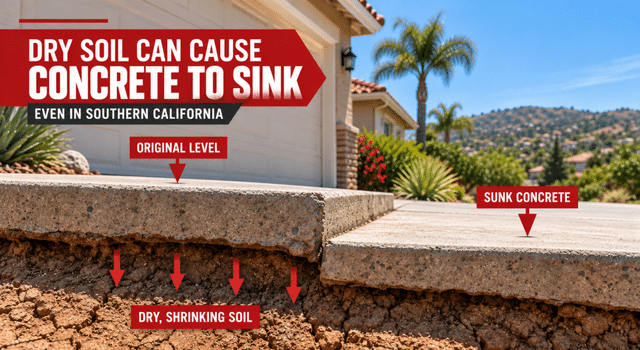
Too little water can also cause problems.
During Southern California's long, hot, dry periods, certain soils can lose moisture and shrink. This can create gaps beneath the concrete and reduce the support holding the slab in place.
Changes between extended dry conditions and periods of rain can make soil movement particularly important to watch.
4. Heavy Rain Can Accelerate Settlement
When Southern California receives significant rainfall, large amounts of water can enter the soil around driveways, patios, sidewalks, and pool decks.
This can contribute to erosion or changes in soil conditions beneath the slab. Homeowners may notice cracks widening, slabs dropping, or new areas of standing water following periods of heavy rain.
The storm may not have caused the entire problem—it may simply have revealed or accelerated settlement that was already developing.
5. Landscaping and Irrigation Can Affect the Soil
Trees, landscaping, sprinklers, and irrigation systems can change moisture levels around concrete.
Tree roots may affect surrounding soil, while leaking or poorly directed irrigation can repeatedly saturate areas beside or beneath a slab. Over time, these changing conditions can contribute to uneven support and settlement.
If concrete is sinking near landscaping or irrigation equipment, it's worth looking beyond the visible crack to determine what's happening underneath.
6. The Ground Wasn't Properly Prepared
The materials beneath concrete matter just as much as the slab itself.
Loose fill, construction debris, or poorly prepared soil can compress over time. A driveway might look perfectly fine for years before one section eventually begins to drop.
This is also why simply sealing a crack doesn't necessarily solve a settlement problem. If the soil underneath the concrete has moved, the slab may still lack adequate support.
7. Voids Have Developed Beneath the Slab
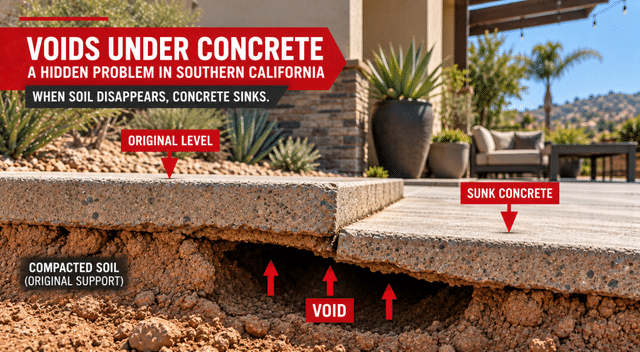
Many causes of sinking concrete ultimately lead to the same problem: voids beneath the slab.
Soil can wash away, shrink, compress, or shift, leaving unsupported areas beneath the concrete. Eventually, the slab may settle into these empty spaces.
Concrete is strong, but it depends on the ground beneath it for support.
Signs Your Concrete May Be Sinking
Settlement isn't always obvious at first. Watch for:
-
Uneven sections of driveways or sidewalks
-
One side of a crack sitting lower than the other
-
Gaps underneath concrete slabs
-
Water pooling where it didn't before
-
Patios or walkways pulling away from adjoining surfaces
-
Uneven or sinking pool decks
-
New trip hazards
A crack by itself doesn't always indicate settlement. However, cracks combined with noticeable height differences between sections of concrete deserve a closer look.
Does Sinking Concrete Have to Be Replaced?
Not always.
If the concrete itself is still in good condition, concrete leveling may be an alternative to tearing it out and replacing it.
Saber Foundation & Concrete Repair uses PolyLevel®, a polyurethane injection system designed to lift and stabilize settled concrete. The material is injected beneath the slab, where it expands to fill voids and help restore support to the concrete.
Depending on the condition of the slab, concrete leveling can be used for areas such as driveways, sidewalks, patios, and pool decks.
Don't Ignore Sinking Concrete
Uneven concrete isn't only an appearance problem. Settlement can create trip hazards, interfere with drainage, and allow cracks to worsen as sections of a slab continue moving.
More importantly, what you see at the surface may only be part of the problem. The underlying cause could be hidden beneath the concrete.
If you've noticed sinking, cracked, or uneven concrete, Saber Foundation & Concrete Repair can evaluate the affected area and determine whether concrete leveling or another repair solution is appropriate.
Schedule a concrete repair inspection with Saber Foundation & Concrete Repair today to find out what's causing your concrete to sink and what can be done to fix it.
