Pacific Palisades Fire Rebuild - Crawlspace Encapsulation During Foundation Reconstruction
Challenge
Background
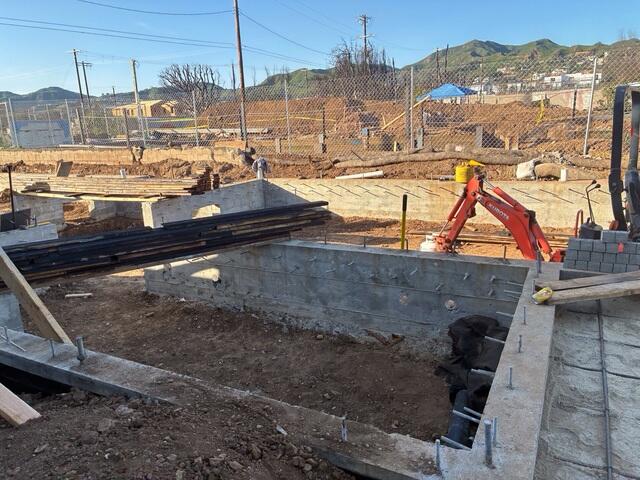
After the devastating Pacific Palisades fire, many homeowners were faced with rebuilding from the ground up. This property was one of them. The original structure had been completely destroyed, leaving only foundation remnants and soil conditions that needed to be addressed before reconstruction could continue.
During the rebuilding phase, the homeowner made a forward-thinking decision: instead of reinstalling a traditional vented crawlspace, they chose to fully encapsulate the crawlspace before framing began.
This was the ideal time to do it. and Saber Foundation & Concrete Repair was ready
When a home is already down to the foundation, access is open, structural components are exposed, and moisture control can be integrated correctly from the start. This prevents long-term issues that commonly affect coastal Southern California homes.
The Challenge
Fire damage isn’t the only concern after a wildfire. In coastal areas like Pacific Palisades, there are additional structural risks:
• Marine layer moisture
• Coastal humidity
• Soil vapor intrusion
• Condensation under new framing
• Long-term mold risk
• Structural wood rot
• Energy loss through unsealed crawlspaces
Because the home was being rebuilt, the crawlspace foundation walls were fully exposed. Anchor bolts were installed, concrete stem walls were visible, and interior soil was accessible. This created a rare opportunity to permanently control moisture before the subfloor system was installed.
If encapsulation is skipped at this stage, retrofitting later becomes significantly more expensive and invasive.
Solution
The Solution
Our team installed a complete crawlspace encapsulation system during the reconstruction phase.
Step 1: Foundation Inspection and Preparation
We evaluated the newly poured foundation walls and verified proper surface conditions for vapor barrier adhesion. Anchor bolts and penetrations were mapped to ensure clean sealing transitions.
Step 2: Wall Vapor Barrier Installation
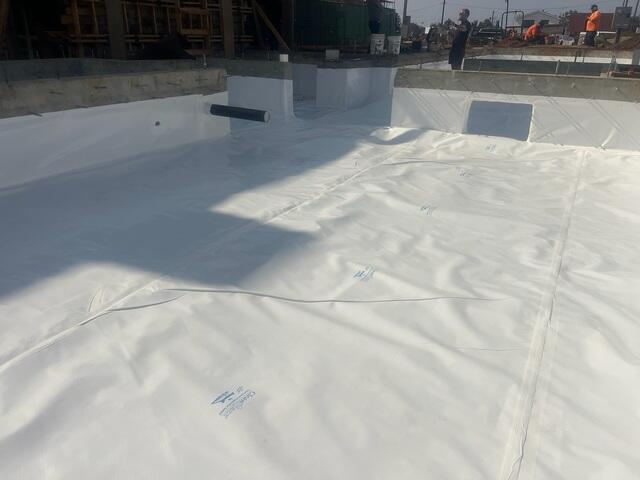
A durable white vapor barrier liner was installed along the interior foundation walls. All seams were sealed and mechanically fastened. Penetrations around anchor bolts and openings were detailed to prevent vapor intrusion.
Step 3: Drainage Layer Installation
A dimpled drainage mat was installed across the crawlspace floor. This creates:
• A capillary break
• Airflow channel beneath the liner
• Long-term durability under soil conditions
• Protection against punctures
This layer ensures that any ground moisture is directed beneath the membrane rather than trapped against it.
Step 4: Full Floor Encapsulation
A heavy-duty white encapsulation liner was installed across the entire crawlspace floor. Seams were overlapped and sealed. The liner was tied into the wall membrane to create a continuous moisture barrier.
Step 5: Sealing Openings
All openings, including framed penetrations and blockouts, were sealed to maintain encapsulation integrity.
The result is a fully conditioned, moisture-controlled crawlspace built into the home from day one.
Why This Matters in Pacific Palisades
Pacific Palisades homes are exposed to unique environmental conditions:
• Coastal humidity
• Salt air
• Shifting soils
• Post-fire soil destabilization
• Rebuild timelines that stretch across seasons
Encapsulating the crawlspace during reconstruction helps:
• Prevent mold growth
• Protect structural framing
• Improve indoor air quality
• Reduce humidity beneath the home
• Increase energy efficiency
• Protect long-term foundation stability
This is not an upgrade. It’s a structural protection decision.
The Result
By integrating crawlspace encapsulation during the rebuild:
• Moisture control is built into the structure
• Future repairs are minimized
• Structural wood components are protected
• The homeowner avoids costly retrofits later
This Pacific Palisades fire rebuild now includes a fully sealed crawlspace system designed for long-term performance in a coastal Southern California environment.