Residential Concrete Lifting
Does your house have a problem with settling or sunken concrete? Contact a foundation repair expert for affordable permanent repairs.
Typical concrete lifting applications using polymer injection:
- Sidewalk, stoop & driveway lifting
- Slab lifting (aka “slab jacking”)
- Raising & stabilizing a sinking in-ground pool
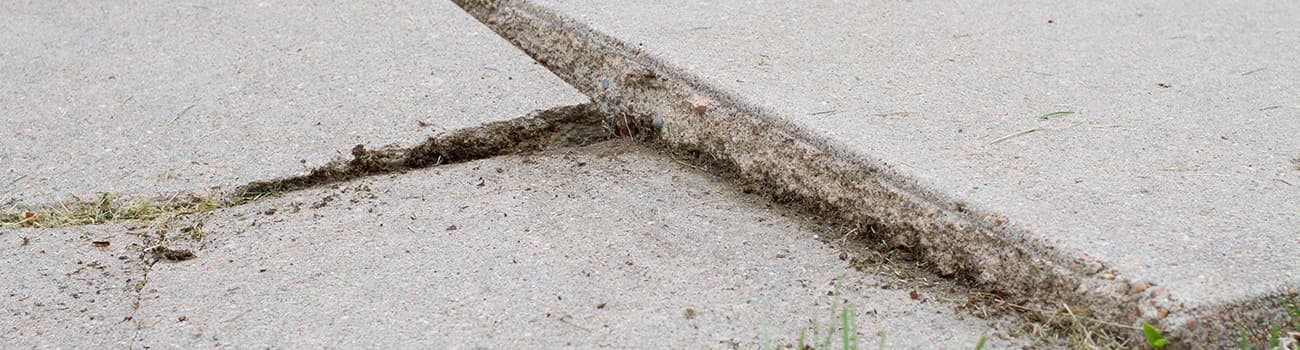
Settled or sunken concrete is a common problem in and around the home. It shows up gradually, as the soil beneath a concrete slab or other element begins to compress or settle. Eventually, you notice that a concrete patio is tilting the wrong way, that a set of precast concrete stairs is leaning away from the house or that a section of a concrete walkway has sunken down, creating a tripping hazard.


Nondestructive repairs are faster and more affordable
Concrete settlement typically occurs because the soil beneath the concrete element simply can't support the weight of the material. Even though there's nothing wrong with the concrete itself, many home repair contractors recommend demolishing the settled concrete and then forming and pouring a new slab in its place. The demolition and new construction strategy will certainly work, but it's expensive, disruptive and time-consuming.
Foundation repair specialists can often repair sunken concrete using proven concrete lifting techniques. Instead of demolishing the sunken concrete, they can overcome weak soil problems and restore the concrete to its proper level. Most of these nondestructive concrete repairs can be completed in less than a day. There are no trips to the landfill, and there's no need to wait for freshly poured concrete to cure.
Polymer injection lifts sunken concrete and strengthens weak soil
Foundation repair contractors have special equipment and innovative techniques for raising sunken concrete. Polymer injection is an excellent example of this technology. Sometimes referred to as "urethane injection," this technique involves pumping urethane foam beneath the settled concrete. A chemical reaction causes the foam to expand with powerful force. The foam pushes the settled concrete up toward its proper position, while also flowing into loose soil and filling voids caused by soil settlement. An experienced technician knows just the right amount of foam to inject.
Within just a couple of minutes, the foam hardens and attains around 90% of its final strength. The cured foam is light, strong, waterproof and chemically inert; it won't degrade or harm the environment.
Concrete lifting using steel piers
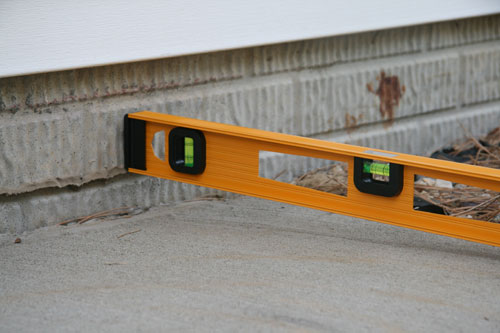
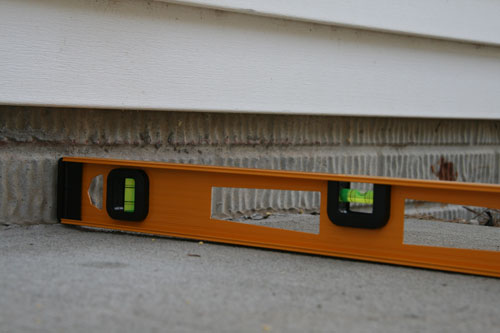
Polymer injection is an excellent technique for lifting sunken concrete slabs –elements like garage floors, sidewalks, and patios. But when a footing or foundation wall sinks down, causing cracks in the foundation and settlement issues in upper floors of the house, another concrete lifting technique is usually called for.
Foundation repair specialists often drive steel piers into the soil to correct sinking or sunken foundation walls, chimneys and precast stairs. A helical pier functions like a huge screw, advancing into the soil as it's turned. A straight steel push pier often relies on the weight of the building to push it into the soil.
With both piering techniques, the goal is to bypass weak soil directly beneath the foundation and connect the foundation with solid, load-bearing soil at greater depth. A strong steel bracket connects the top of each pier to the foundation, enabling technicians to elevate the bracket on the pier, thus lifting the settled concrete.
