Filling Voids with Polyurethane Resin
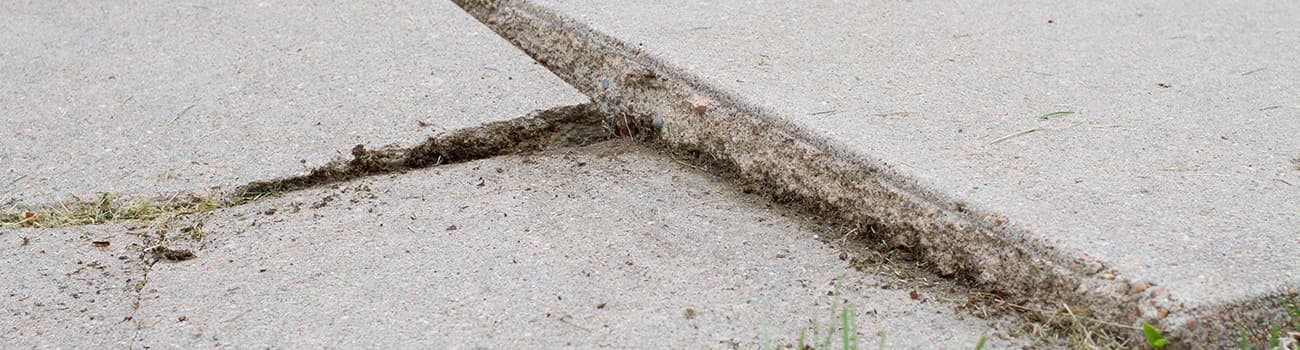
Voids can form under concrete slabs in several ways, most of which, deal with the soil that resides underneath the foundation. Weak soil or poorly compacted soil prior to construction are the two most likely causes for voids to form under the slab. Other causes related to soil removal, include sinkholes, washouts or by mechanical means. For example, when the slab has been raised, via slab piers and/or jacks, sub-surface voids will be created. Such voids no longer support the structure and can attract animals, insects, and moisture.
Void filling is the process of filling these gaps and empty spaces with a material that will not only support the slab, but will eliminate the void. Saber Foundation & Concrete Repair uses a polyurethane foam because it’s minimally disruptive and because of its great expanding characteristics for filling voids. This lightweight foam is a two-part compound that is mixed as it is injected into the space, where it expands to fill all empty spaces. Because the foam is lightweight, it does not burden the weak soils and it also forms a moisture-resistant barrier on the underside of the slab.
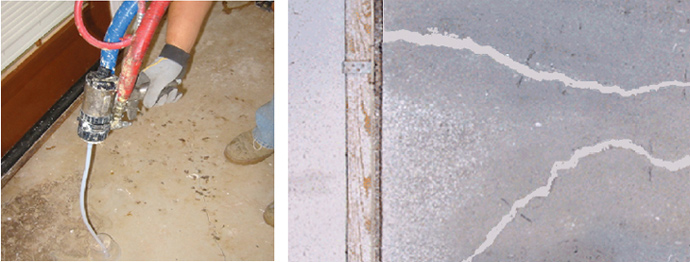
Injection holes are small and can be easily patched upon job completion. The foam is then injected through small 3/8" holes that are bored directly through the concrete slab. Holes are typically spaced in a 5-ft. by 5-ft. grid pattern throughout the affected area. Direct access to the slab is required, so any carpet, tile or other floor coverings will need to be removed prior to injection.
Bonding Fractures with Epoxy Injection
Structural cracks in the foundation footings or slab are repaired by injecting a high-strength epoxy resin that bonds fractured concrete together. The most appropriate injection resin is determined by the width of the crack and its location. Lower viscosity injection resins are best for filling narrow cracks. Higher viscosity injection resins are better for filling wide cracks.
The crack is first cleaned of debris and then capped with an epoxy gel to contain the epoxy resin pressure within the crack. Injection ports are placed into the crack and held in place by the gel. A two-part epoxy compound is then pumped into the crack via the ports with a high-pressure injection system. The low-viscosity and high-pressure pumping ensure that the epoxy will fill the fine hairline cracks.
Contact us for all aspects of concrete foundation repair, including void filling and bonding fractures. We serve San Diego, Long Beach, Los Angeles and the Southern CA Area!
